



Texas, USA: From studying electrical engineering to working with modern power equipment in the United States, Bangladeshi engineer Abdullah Al Fathah is now focusing his research on one of the world’s fastest-growing areas: the use of artificial intelligence in energy systems.
His goal is not simply to use AI as a new technology. He wants to understand how intelligent systems can help countries use renewable energy more effectively, improve electricity networks and reduce unnecessary carbon emissions.
Currently working in Texas, Fathah is involved in the U.S. electrical power industry while continuing independent research in artificial intelligence, smart-grid technology and renewable energy.
A Different Way of Looking at the Energy Problem
According to Fathah’s research direction, the future power system will need to do more than simply deliver electricity.
It will need to understand changes in electricity demand, renewable-energy production and equipment conditions.
This is where artificial intelligence can play a role.
AI systems can study large amounts of information much faster than a person can. They can recognize patterns, predict what may happen next and help engineers make better decisions.
Fathah’s research focuses on developing AI-driven systems, predictive methods and data-based optimization approaches for improving renewable-energy integration, grid efficiency and carbon reduction.
Renewable Energy Brings New Challenges
Solar and wind power are important for the world’s clean-energy transition, but they also behave differently from traditional power generation.
Solar production falls when there is less sunlight. Wind power changes depending on weather. At the same time, homes, businesses and industries continuously change how much electricity they need.
Fathah is studying how AI could help energy systems respond to these changes more intelligently.
The aim is to make renewable energy easier to use without reducing the reliability of electricity networks.
 Research Connected with Real Industry
One of the strengths of Fathah’s work is the connection between research and practical engineering.
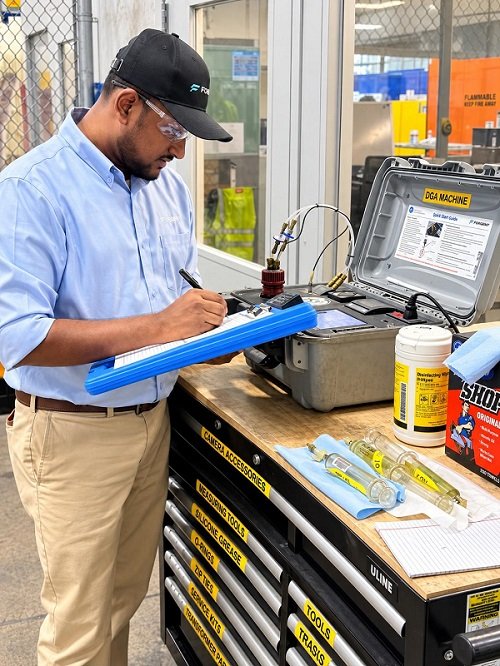
He currently works as a Sales Engineer with Forgent Power Solutions’ VanTran transformer operation in Waco, Texas.
This gives him experience with real power equipment and industrial electrical applications.
His recent work involving AI-based monitoring of power transformers is one example of how his wider research can be applied in practice.
However, his research is not limited to transformers.
His published work has also covered areas such as smart-grid predictive maintenance, cybersecurity, solar energy, building-integrated solar technology and carbon-reduction methods.
From Buildings to Smart Power Grids
Fathah has also worked on research involving buildings that can produce some of their own electricity using solar technology.
The idea is to make renewable energy part of everyday infrastructure rather than keeping it separate from buildings and cities.
His work has also explored how machine learning can help detect unusual activities in smart electricity networks and how AI-based monitoring can identify equipment problems before failures occur.
Although these areas may appear different, they are connected by a common idea: using technology to make energy systems more intelligent and sustainable.
A Global Vision
Fathah sees this work as having value beyond the United States.
Countries around the world face different energy problems, but most share some common challenges: growing electricity demand, the need for reliable power and pressure to reduce environmental impact.
In Bangladesh, for example, industrial development and growing urban electricity demand are creating a need for more efficient and reliable energy infrastructure.
AI cannot solve every energy problem by itself, but Fathah believes it can provide engineers with better information and help systems make smarter decisions.
His long-term vision is to continue working at the point where artificial intelligence, renewable energy and electrical engineering meet.
For this Bangladeshi engineer, the goal is clear: contribute to a future where electricity systems are not only stronger, but also smarter, cleaner and more efficient.
““I want to use artificial intelligence not only to make power systems smarter, but also to reduce energy waste, improve reliability, and support lower carbon emissions across different industries.”